By Yayasan Kawan Baik Indonesia

& Fair Future Foundation

Covid-19 East Sumba

Rumah Kambera

“Rumah Kambera”; “Rumah” means residence and Kambera is the name of the sub-district. We chose the word “home” deliberately, because in addition to being our future office in Sumba, it will also be a meeting place, sharing activities, teaching and learning, a shelter for volunteers, a place to exchange ideas, a playroom, find innovative ideas, all with a shared vision, namely to improve the quality of life of people living in the East Sumba area.

News
SUMBA PHOTO STORIES

A photography mentoring project to become a medium of expression and storytelling through photos. Starting from January 2020, training has been conducted in two schools, in two villages, in the eastern part of Sumba.

BANGUN MBINUDITA

since August 2020 we are rebuilding a school that collapsed in the wind at the end of 2019. With this development, every year 65 to 100 children can attend school safely and comfortably.

FIRST AID KIT

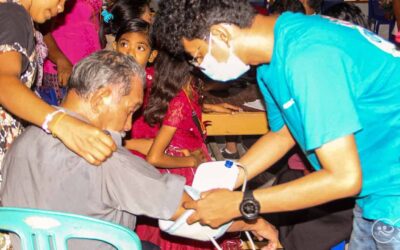
A project that aims to provide first aid through first aid kits that will be distributed to every school and traditional medical personnel accompanied by Faskes personnel in East Sumba.

KAMPUNG SCHOOL

A joint project of Charis Sumba School. In the last four years, in the field of education, Charis Sumba School has accompanied 37 teachers in 18 remote village schools, especially PAUD schools and emergency classes in the east Sumba area.

ACCESS TO CLEAN WATER

One of the main problems in East Sumba is limited access to clean water. Generally, people still rely on springs, wells, and rainwater reservoirs but still do not meet the basic needs of water.

GARDEN

One of the biggest assets of this house, is the land on which this house stands; the area is quite large and suitable for farming, we will make gardens.

Instagram #RumahKambera

This error message is only visible to WordPress admins
There has been a problem with your Instagram Feed.

#RumahKambera Videos

In East Sumba, a serious infection is not only a medical problem. It can become a race against distance, transport, poverty, delayed recognition, and the health system's ability to respond in time.

This film follows the Sumba Sepsis Study 2026 from its first clinical discussions to the final analysis. It documents the development of the questionnaires, meetings with doctors and healthcare workers, training of field teams, household interviews in remote villages, digital data collection, medical review and the preparation of the preliminary scientific report.

The study brought together 1,001 household interviews, representing 4,977 usual household residents, and 162 healthcare-worker questionnaire submissions across East Sumba.

The findings describe a strained patient pathway. 95.2% of households did not report water and soap together at a handwashing place. 40.3% reported no toilet or open defecation. Only 45.2% reported seeking outside help on the same day after illness became serious. Among healthcare-worker responses, 97.5% said patients arrive late in an advanced condition at least sometimes, while 88.9% reported no previous training specifically on sepsis or severe infection.

These figures do not represent the prevalence of sepsis in East Sumba. The household survey did not retrospectively diagnose sepsis. It documents something different and equally important: where prevention, recognition, access, first-contact treatment, referral and follow-up can fail before a patient receives effective care.

The film also shows the work behind the data: reaching homes inaccessible by vehicle, returning when families were away in their fields, listening in local languages, questioning inconsistencies, and confronting what the numbers can and cannot tell us.

Behind every percentage is a family. Behind every delayed referral is a person waiting. Behind every missing record is a life we may fail to understand.

Fair Future Foundation Switzerland and Kawan Baik Indonesia led the study, with participation from healthcare professionals, community teams, local authorities, and the Government of East Sumba.

A person must remain visible behind every record.

@who - @sepsisalliance - @WorldSepsisCongress - @UNICEF - @rotary - @kawanbaikindonesia3641 - @KawanBaikIndonesia - @KementerianKesehatanRI - @malariapartnersinternation8808   

#Sepsis #WorldSepsisDay #EastSumba #GlobalHealth #PrimaryHealthcare
Sumba Sepsis Study 2026 | When Infection Becomes a Race Against Time

September 21, 2026 5:20 pm

In East Sumba, a serious infection is not only a medical problem. It can become a race against distance, transport, poverty, delayed recognition, and the health system's ability to respond in time.

This film follows the Sumba Sepsis Study 2026 from its first clinical discussions to the final analysis. It documents the development of the questionnaires, meetings with doctors and healthcare workers, training of field teams, household interviews in remote villages, digital data collection, medical review and the preparation of the preliminary scientific report.

The study brought together 1,001 household interviews, representing 4,977 usual household residents, and 162 healthcare-worker questionnaire submissions across East Sumba.

The findings describe a strained patient pathway. 95.2% of households did not report water and soap together at a handwashing place. 40.3% reported no toilet or open defecation. Only 45.2% reported seeking outside help on the same day after illness became serious. Among healthcare-worker responses, 97.5% said patients arrive late in an advanced condition at least sometimes, while 88.9% reported no previous training specifically on sepsis or severe infection.

These figures do not represent the prevalence of sepsis in East Sumba. The household survey did not retrospectively diagnose sepsis. It documents something different and equally important: where prevention, recognition, access, first-contact treatment, referral and follow-up can fail before a patient receives effective care.

The film also shows the work behind the data: reaching homes inaccessible by vehicle, returning when families were away in their fields, listening in local languages, questioning inconsistencies, and confronting what the numbers can and cannot tell us.

Behind every percentage is a family. Behind every delayed referral is a person waiting. Behind every missing record is a life we may fail to understand.

Fair Future Foundation Switzerland and Kawan Baik Indonesia led the study, with participation from healthcare professionals, community teams, local authorities, and the Government of East Sumba.

A person must remain visible behind every record.

@who - @sepsisalliance - @WorldSepsisCongress - @UNICEF - @rotary - @kawanbaikindonesia3641 - @KawanBaikIndonesia - @KementerianKesehatanRI - @malariapartnersinternation8808

#Sepsis #WorldSepsisDay #EastSumba #GlobalHealth #PrimaryHealthcare

YouTube Video VVVyeEFCTmJaaWluWGdSQzVYNUI4SnlBLmNUOXpJczN5RGdN

Sumba Sepsis Study 2026 | When Infection Becomes a Race Against Time

The Sumba Sepsis Study 2026 begins long before the first household interview.

Over two intensive days of training, nurses, healthcare workers, Kawan Sehat health agents, and enumerators learn how to conduct interviews, collect reliable data, and communicate respectfully with families living in some of the most remote villages of East Sumba.

Through realistic role-playing exercises, participants prepare for interviews that may last up to two hours per household. They learn how to explain complex medical concepts, how to ask sensitive questions, and how to ensure that every answer accurately reflects the realities experienced by the families they meet.

Over the coming months, these teams will visit nearly 600 households across East Sumba. Their mission is to help us understand why sepsis remains such a major cause of suffering and death, why many patients arrive late for treatment, what barriers prevent access to healthcare, and what factors contribute to severe infections and preventable mortality.

This study represents an investment of more than half a billion Indonesian rupiah and brings together healthcare professionals, researchers, community leaders, and international partners.

Because understanding sepsis is the first step toward preventing it.

Sumba Sepsis Study 2026
Understand. Prevent. Save Lives.

#SepsisStudy2026 #SepsisAwareness #GlobalHealth #PublicHealth #RuralHealth #Indonesia #EastSumba #PrimaryMedicalCare #FairFutureFoundation #KawanSehat
Training the Teams Behind the Sumba Sepsis Study 2026 | Understanding Sepsis in Rural Indonesia

May 31, 2026 11:29 am

The Sumba Sepsis Study 2026 begins long before the first household interview.

Over two intensive days of training, nurses, healthcare workers, Kawan Sehat health agents, and enumerators learn how to conduct interviews, collect reliable data, and communicate respectfully with families living in some of the most remote villages of East Sumba.

Through realistic role-playing exercises, participants prepare for interviews that may last up to two hours per household. They learn how to explain complex medical concepts, how to ask sensitive questions, and how to ensure that every answer accurately reflects the realities experienced by the families they meet.

Over the coming months, these teams will visit nearly 600 households across East Sumba. Their mission is to help us understand why sepsis remains such a major cause of suffering and death, why many patients arrive late for treatment, what barriers prevent access to healthcare, and what factors contribute to severe infections and preventable mortality.

This study represents an investment of more than half a billion Indonesian rupiah and brings together healthcare professionals, researchers, community leaders, and international partners.

Because understanding sepsis is the first step toward preventing it.

Sumba Sepsis Study 2026
Understand. Prevent. Save Lives.

#SepsisStudy2026 #SepsisAwareness #GlobalHealth #PublicHealth #RuralHealth #Indonesia #EastSumba #PrimaryMedicalCare #FairFutureFoundation #KawanSehat

YouTube Video VVVyeEFCTmJaaWluWGdSQzVYNUI4SnlBLmxoTTRXZTB4UnBR

Training the Teams Behind the Sumba Sepsis Study 2026 | Understanding Sepsis in Rural Indonesia

Laindatang is a village we know well. Over the past three years, we have built twelve water reservoirs of 5000 litres or more, including a 115,000-litre tank, installed sanitary facilities, and regularly train teachers and families. Two Kawan Sehat health agents also work here. However, none of this can operate without access, and the road to the school has become nearly impassable.

Yesterday, I cycled the eight kilometres up to the hilltop school. This track, already the steepest in the area, is one we concreted ourselves so trucks could deliver materials for the reservoirs. Today, it is broken again—slippery, cracked, covered in mud, and treacherous at every turn. I had to stop dozens of times just to stay upright. Filming while moving was impossible; the risk of falling was too high.

Children walk this road every morning, often barefoot, arriving at school soaked and covered in mud. Some teachers cannot reach the classrooms at all. Yesterday, only three teachers got there for six classes; the others were trapped below because the road is no longer maintained. The authorities remain absent, too preoccupied elsewhere, leaving the community on its own.

Two teachers live beside the school in a fragile shelter without electricity or running water, aside from what we have provided. At night, they rely on a single SolarBuddy lamp to see. This film shows what access means in East Sumba. Without a safe road, education, health, and even daily life are pushed further out of reach.

@KawanBaikIndonesia @UNICEF @rotary @malariapartnersinternation8808 @KementerianKesehatanRI @KementerianSosialRI @upt-kphsumbatimur9690
The Impossible Road to Laindatang School and the Children Who Walk It Every Morning

December 11, 2025 6:24 pm

Laindatang is a village we know well. Over the past three years, we have built twelve water reservoirs of 5000 litres or more, including a 115,000-litre tank, installed sanitary facilities, and regularly train teachers and families. Two Kawan Sehat health agents also work here. However, none of this can operate without access, and the road to the school has become nearly impassable.

Yesterday, I cycled the eight kilometres up to the hilltop school. This track, already the steepest in the area, is one we concreted ourselves so trucks could deliver materials for the reservoirs. Today, it is broken again—slippery, cracked, covered in mud, and treacherous at every turn. I had to stop dozens of times just to stay upright. Filming while moving was impossible; the risk of falling was too high.

Children walk this road every morning, often barefoot, arriving at school soaked and covered in mud. Some teachers cannot reach the classrooms at all. Yesterday, only three teachers got there for six classes; the others were trapped below because the road is no longer maintained. The authorities remain absent, too preoccupied elsewhere, leaving the community on its own.

Two teachers live beside the school in a fragile shelter without electricity or running water, aside from what we have provided. At night, they rely on a single SolarBuddy lamp to see. This film shows what access means in East Sumba. Without a safe road, education, health, and even daily life are pushed further out of reach.

@KawanBaikIndonesia @UNICEF @rotary @malariapartnersinternation8808 @KementerianKesehatanRI @KementerianSosialRI @upt-kphsumbatimur9690

YouTube Video VVVyeEFCTmJaaWluWGdSQzVYNUI4SnlBLm5pUTJINzJ5VGNv

The Impossible Road to Laindatang School and the Children Who Walk It Every Morning